The Current Market Approach: A Model Built on Fragmentation
The direct-to-consumer (D2C) digital service model has fundamentally changed how consumers interact with brands by shifting away from traditional distribution models toward personalized engagement. However, its rapid, unstructured growth has created a paradox. While consumers have more choices than ever, they are faced with a disjointed digital experience, characterized by:- App Fragmentation: Each new service requires a separate login, profile, payment method, and set of preferences. This creates a high-friction environment for users.
- Siloed Business Operations: For Merchants, achieving broad market reach—akin to the omnipresence of major streaming giants—remains a significant challenge. They often lack access to a global network of Resellers (Service Providers).

Subscription Fatigue: The Consequence of a Broken Model
The direct consequence of this fragmented market is subscription fatigue. Consumers become overwhelmed by the complexity of managing their digital lives, leading to higher churn rates as they constantly re-evaluate the standalone value of each service. For Resellers and Merchants, this translates directly to business challenges:- Increased Customer Churn: It is harder to retain customers who do not see their services as part of a larger, more valuable ecosystem.
- Higher Acquisition Costs: Competing on a standalone basis in a crowded market is expensive and yields a lower return on investment.
- Missed Revenue Opportunities: Without the ability to easily bundle and cross-promote, businesses leave significant revenue on the table.
Subscription Models and the Path to Success
To combat subscription fatigue, the market is shifting towards aggregated and curated subscription models. Success is no longer just about providing a great standalone service; it’s about delivering a unified and valuable experience.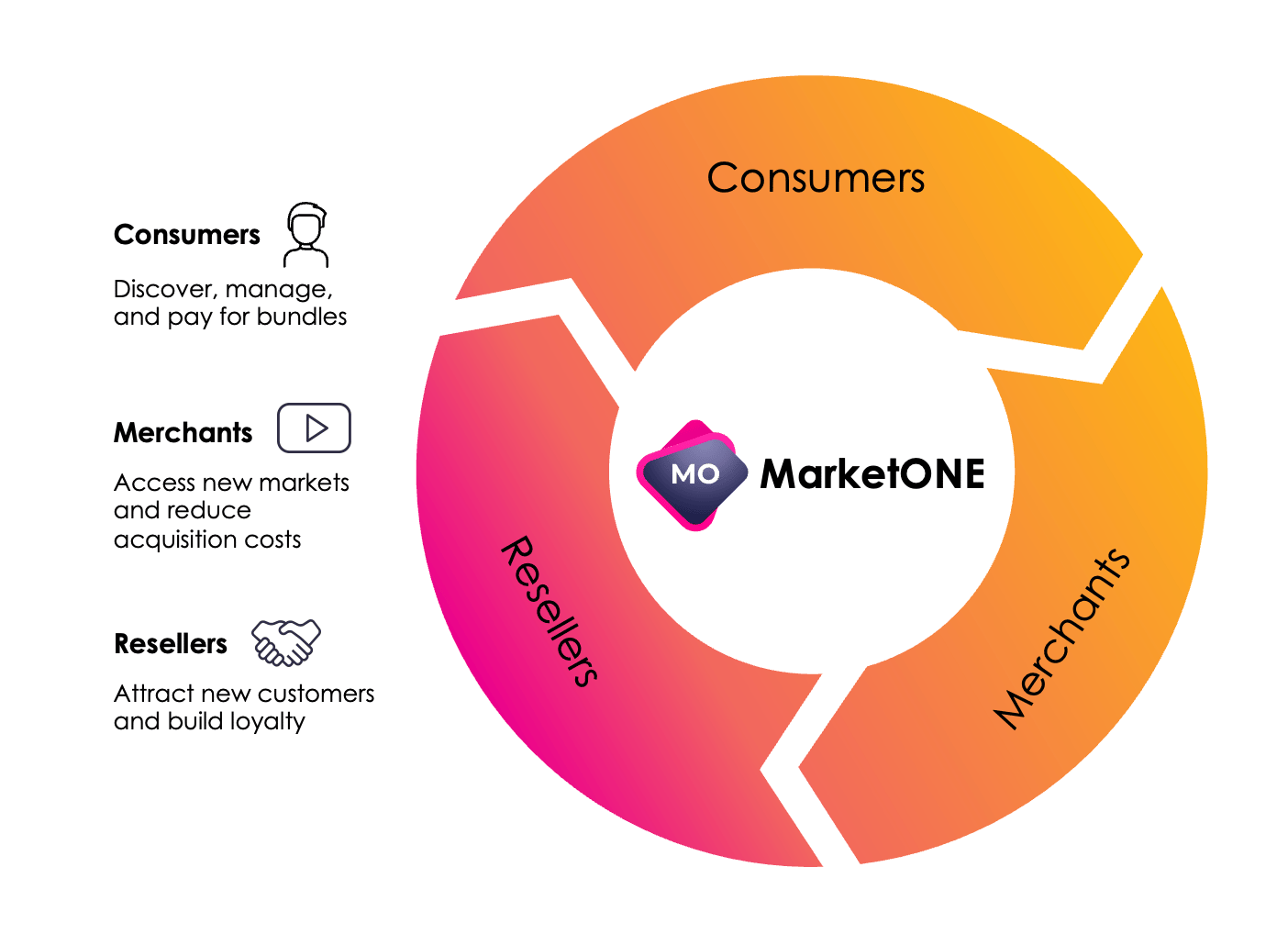
- Consumers enjoy a single point of access to discover, manage, and pay for multiple services, often through bundles that provide superior value.
- Merchants gain access to a large, qualified user base through trusted Resellers, dramatically reducing churn and customer acquisition costs.
- Resellers evolve beyond providing connectivity, becoming indispensable digital hubs that increase customer loyalty and lifetime value.
The MarketONE Solution
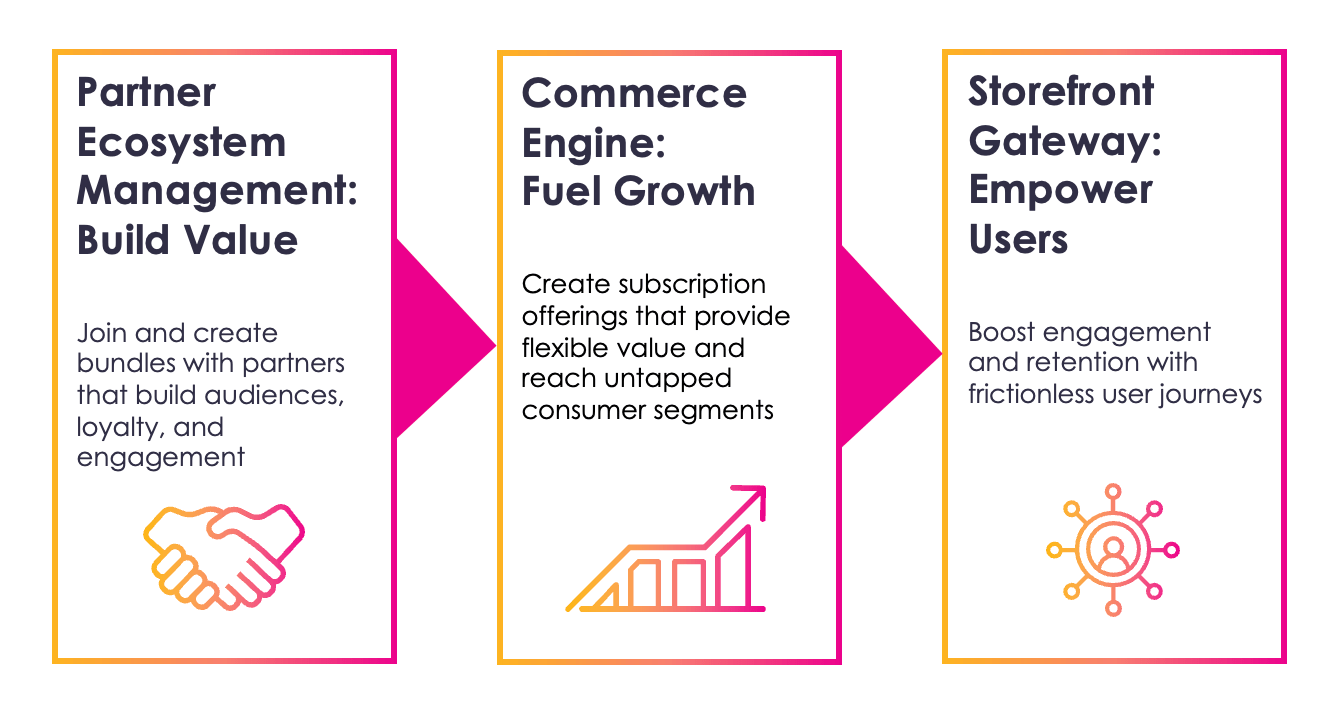
Partner Ecosystem Management: Building Value To effectively combat consumer app fragmentation, Resellers and Merchants must be able to form partnerships quickly and efficiently. Partner Ecosystem Management is the component of MarketONE that addresses this need. It is the core of any configuration and is designed to manage the entire lifecycle of these crucial ecosystem partnerships. By providing a framework for streamlined onboarding, agreement management, and settlement, Partner Ecosystem Management allows businesses to focus on building value for their customers, not on managing complex one-off integrations. Commerce Engine: Fueling Growth A primary strategy for reducing subscription fatigue is to offer consumers compelling and flexible value. The Commerce Engine is the component of MarketONE that provides this capability. It enables Resellers to create and manage sophisticated subscription offerings, including unique bundles, flexible pricing structures, and promotional campaigns designed to increase customer loyalty. For Merchants, this means their services can be packaged in innovative ways that fuel growth and reach new, previously untapped, consumer segments. Storefront Gateway: Empowering Users Ultimately, the success of any digital ecosystem hinges on a seamless user experience. The Storefront Gateway is the powerful back-end component that makes this possible. It provides a comprehensive set of APIs and user interfaces to build and manage a frictionless digital storefront. By handling the complexities of the user journey—from discovery and single sign-on to account and subscription management—the Storefront Gateway empowers end-users with the simple, intuitive experience they demand, driving adoption and long-term retention for the entire ecosystem.